All the versions of this article: [English] [français]
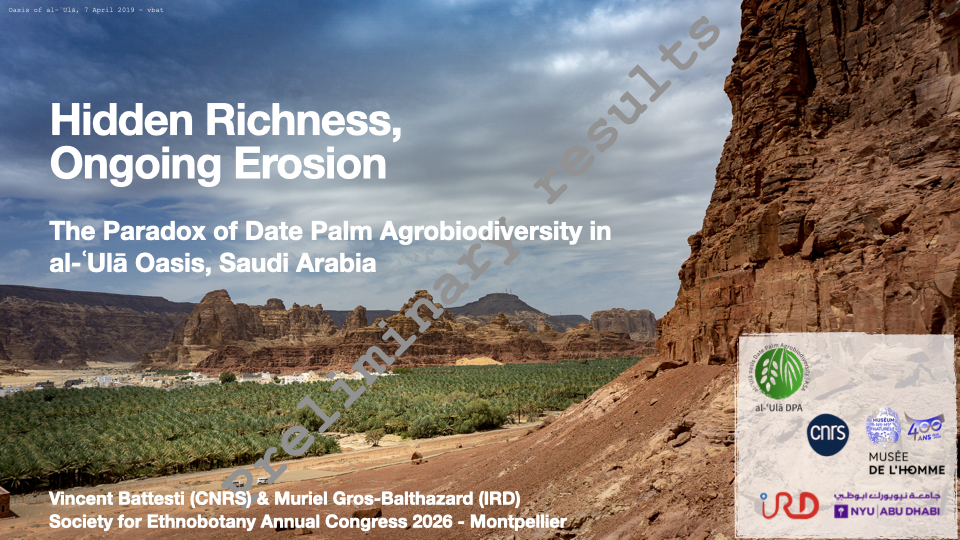
– Lecture (in English): Hidden Richness, Ongoing Erosion, The Paradox of Date Palm Agrobiodiversity in al-ʿUlā Oasis, Saudi Arabia
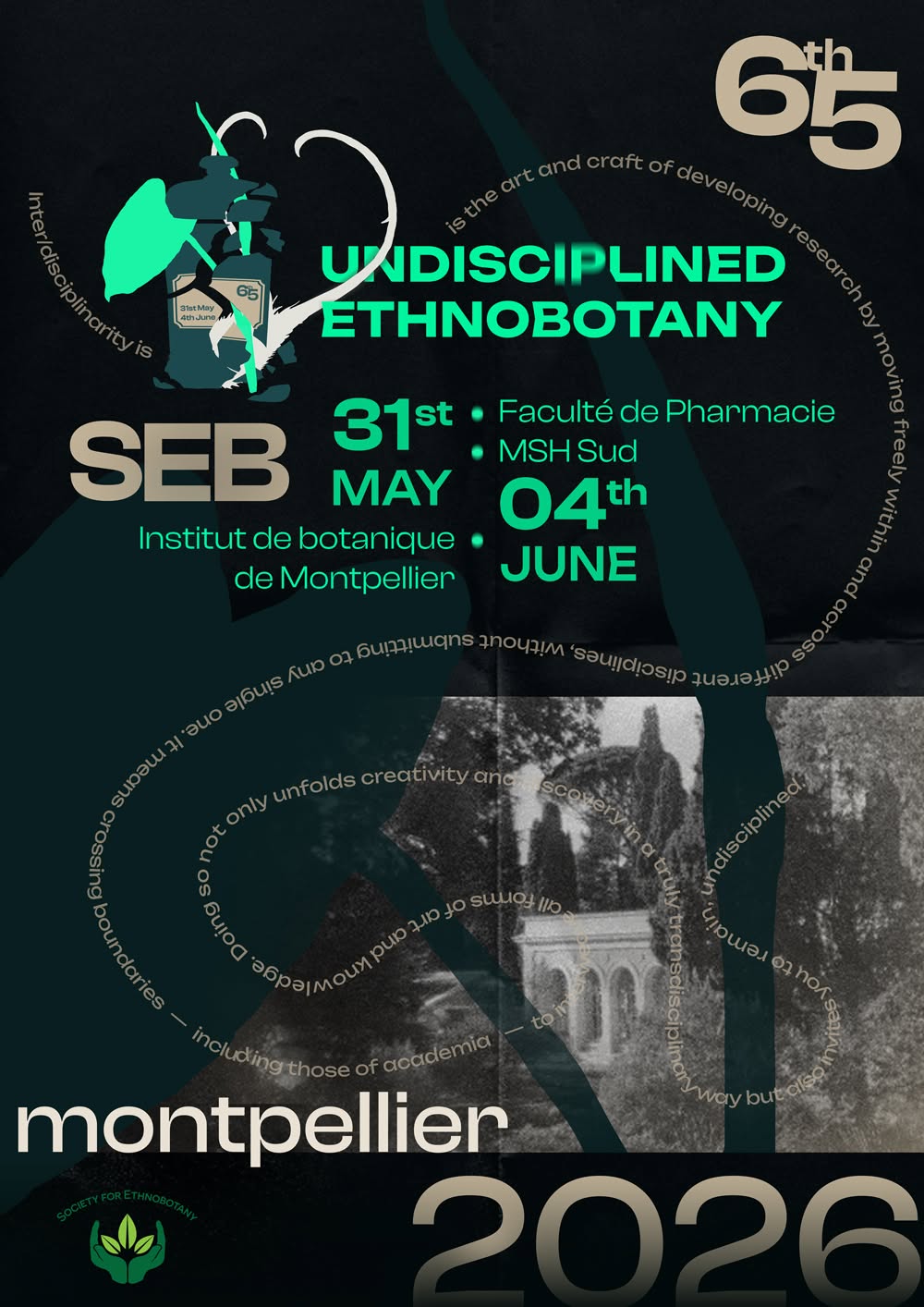
given as part of the Society for Ethnobotany Annual Congress 2026 (Undisciplined Ethnobotany),
Institut de Botanique, MSH Sud, Faculté de pharmacie, Montpellier (France), 1 May-4 June 2026.
4 June 2026.
Conference website: https://ethnobotany.org/home/meetin...
– Abstract:
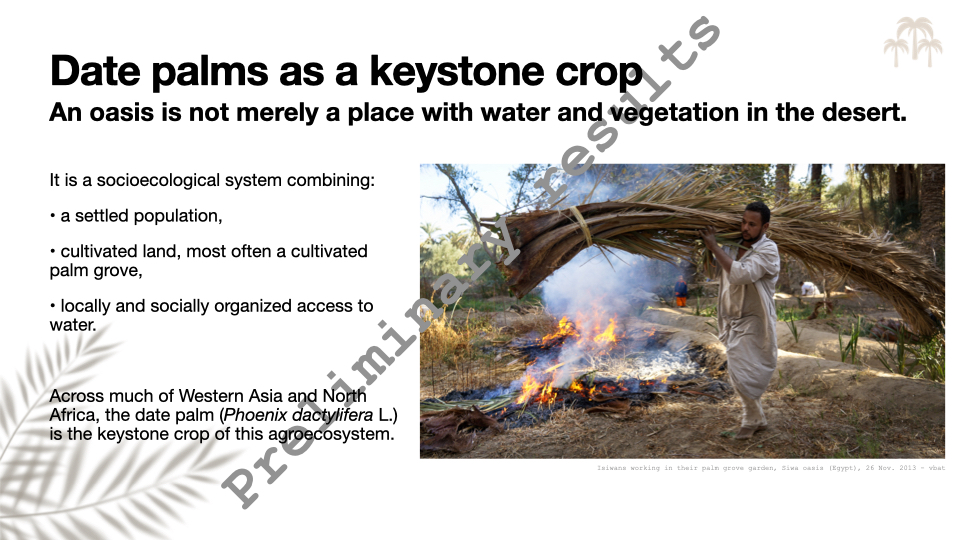
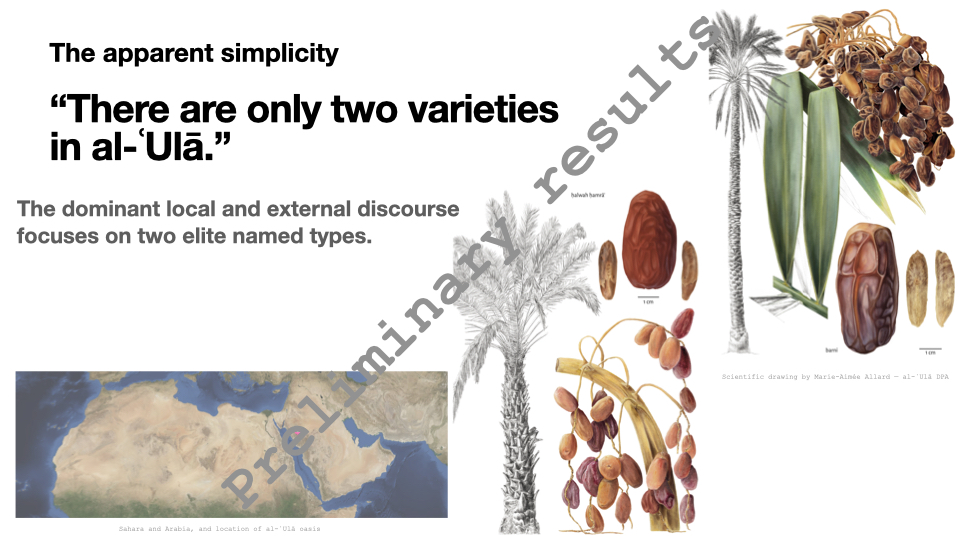
The date palm (Phoenix dactylifera L.) is the keystone-crop of oasis agroecosystems across North-Africa and West-Asia. In many oases, farmers maintain large assemblages of locally named types through a combination of clonal propagation and recurrent incorporation of seed-grown palms. Al-ʿUlā oasis (northwestern Saudi Arabia) offers an exceptional case study of such agrobiodiversity system dynamics.
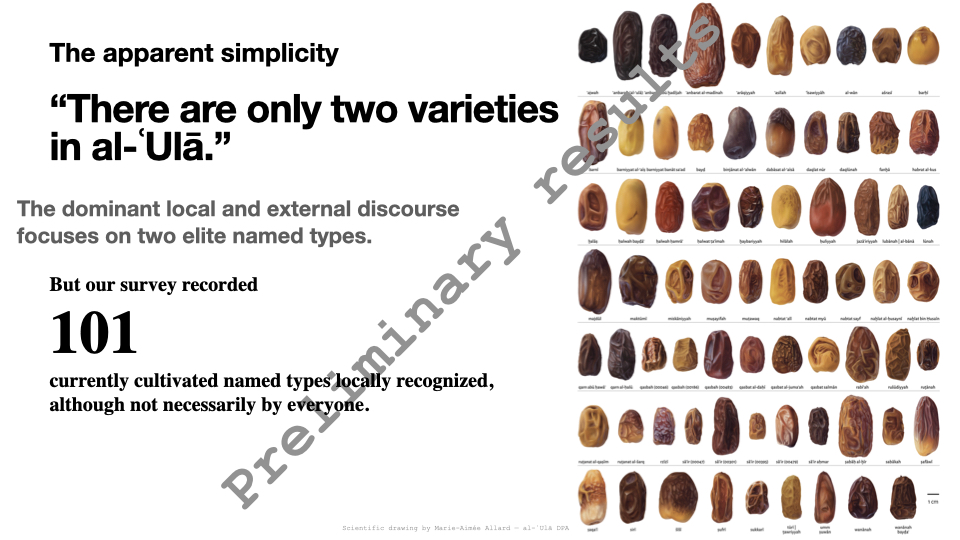
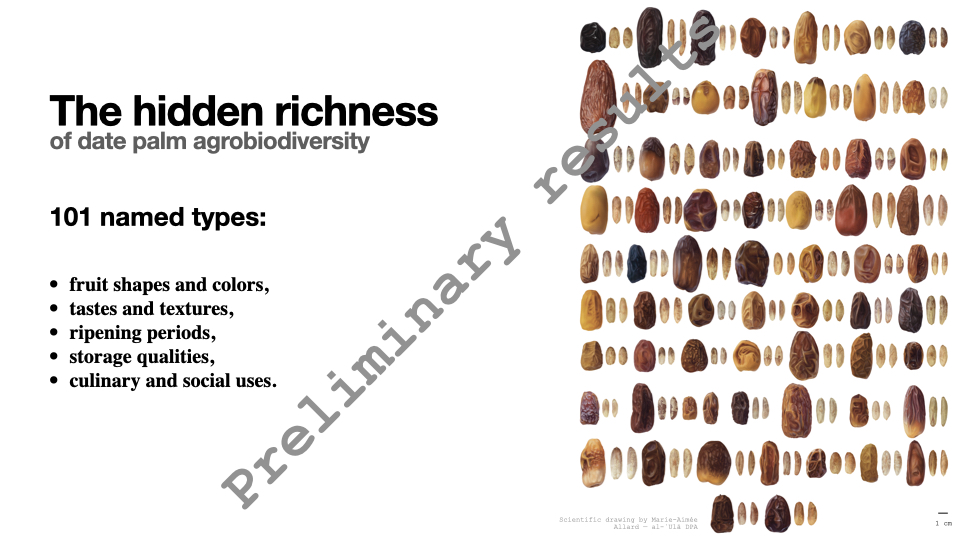
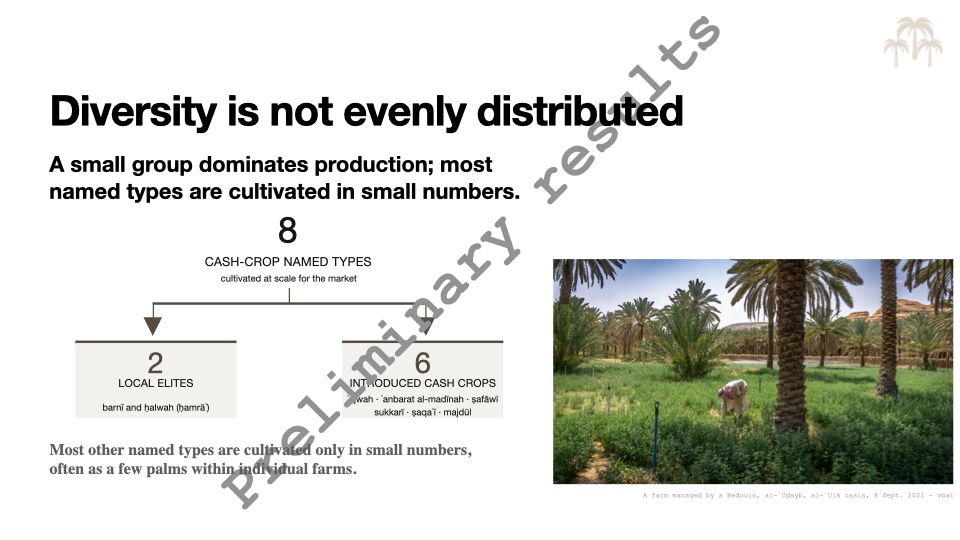
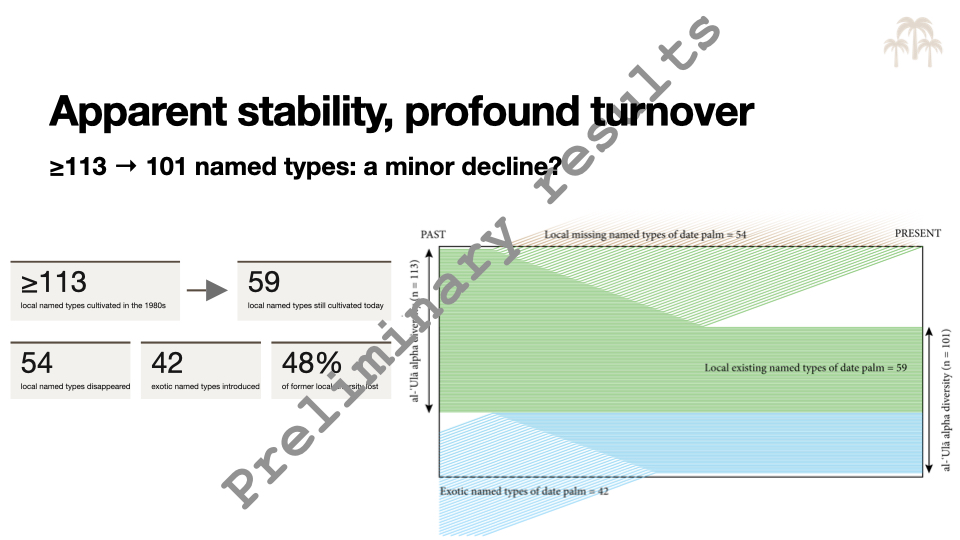
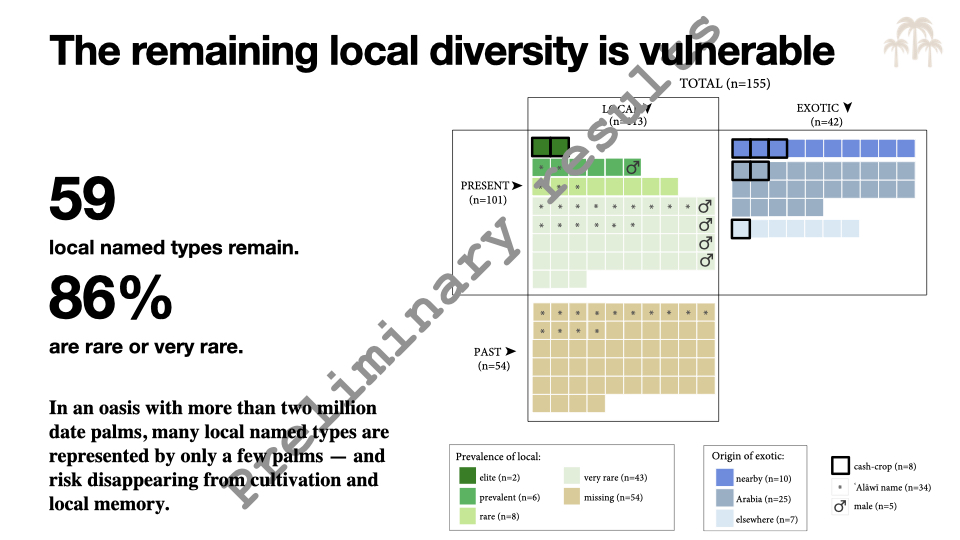
Drawing on six-year interdisciplinary fieldwork (2019–2025), combined ethnobotanical surveys and morphometric analyses of date seeds documented both diversity and transformation of the local varietal repertoire. Ethnobotanical data record 101 named types currently cultivated in al-ʿUlā, yet concealing a troubling reality: only 59 are locally recognized as indigenous, while 42 are commercially or collection-driven introductions from other oases, contributing to a homogenized cultivated repertoire.
Historical ethnobotanical records suggest the oasis counted four decades ago at least 113 cultivated local types—meaning 54 already disappeared, and 86% of those remaining are facing extinction—alongside ambivalent attitudes toward preservation among both farmers and national authorities.
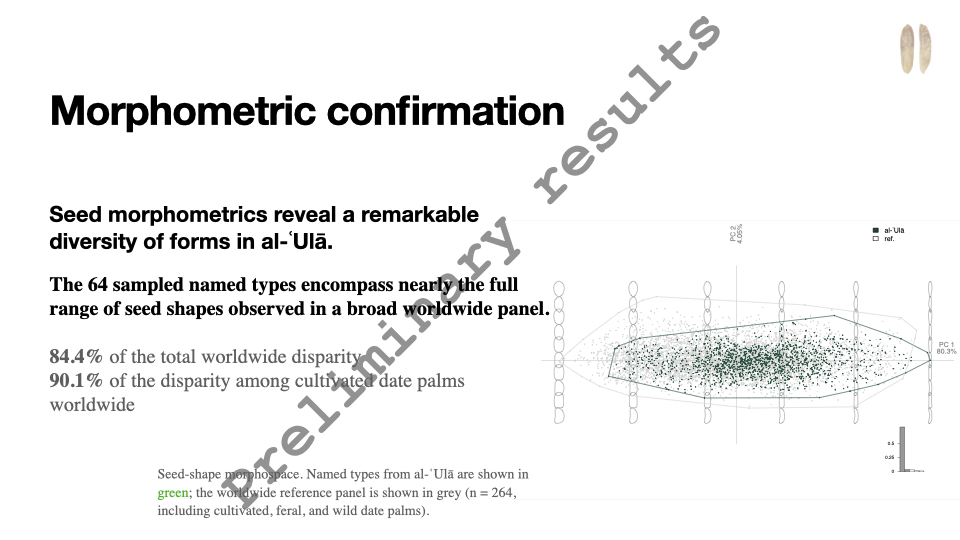
Morphometric analyses show that al-ʿUlā encompasses most of the cultivated seed-shape variation documented across the species’ range—consistent with active farmer maintenance of phenotypic diversity. Results point to a dual selective regime: directional selection toward elongated morphologies in vegetatively propagated varieties, and diversification generated by recurrent seedling palms’ recruitment.
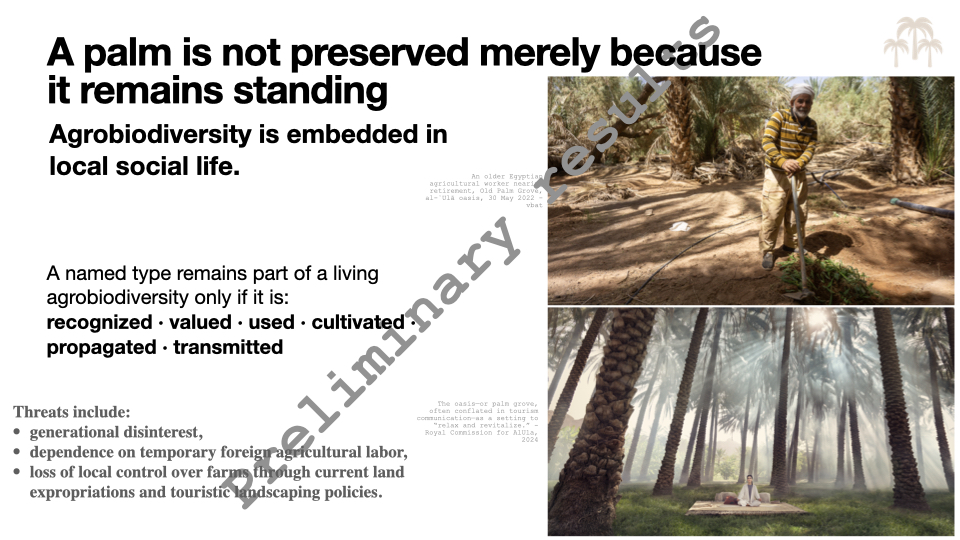
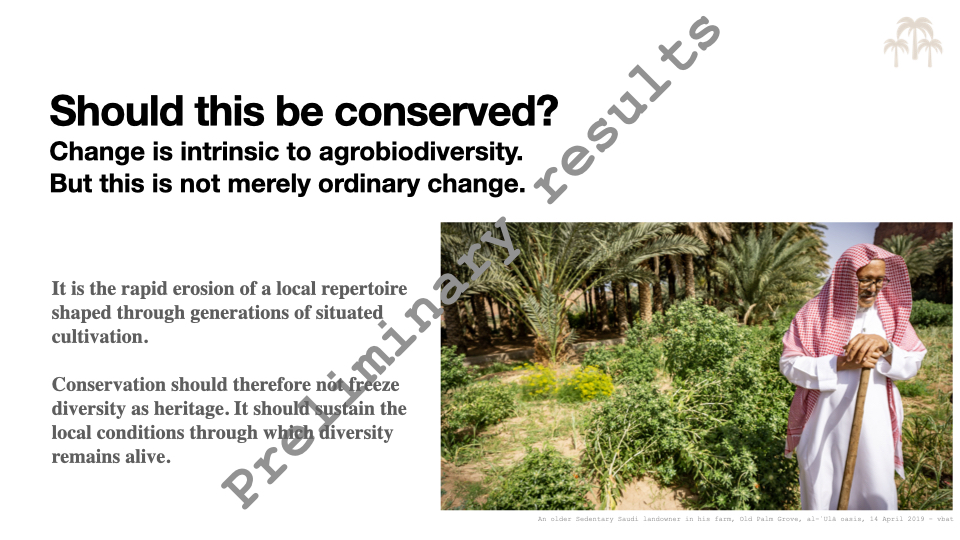
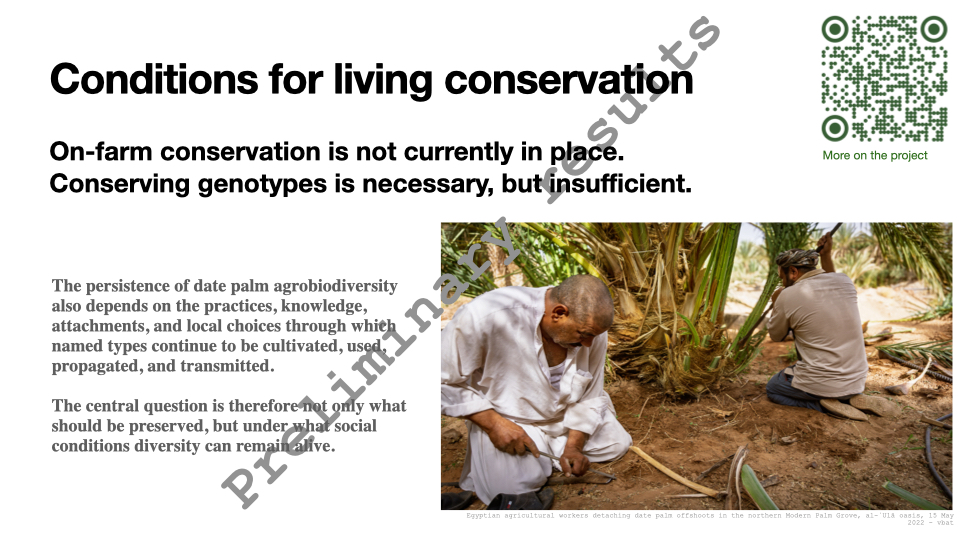
Together, a paradoxical situation: a remarkable reservoir of date-palm agrobiodiversity persists in the oasis, yet undergoing rapid erosion. Preserving this diversity requires not only on-farm conservation of rare local types, but also sustaining the social and agronomic processes through which farmers generate and maintain agrobiodiversity.
Portfolio