

All the versions of this article: [English] [français]
– Vincent Battesti & Muriel Gros-Balthazard (2025) — « al-ʿUlā DPA Project Final Report (2019–2025), Ethnographic, genetic, and morphometric analyses of the date palm agrobiodiversity in al-ʿUlā oasis » Final Report to AFALULA, Paris, Montpellier, Abu Dhabi CNRS, IRD, New York University, 39 p.
Notice: https://hal.science/hal-05426580
⟶ Final report for the al-ʿUlā DPA project.

– Abstract:
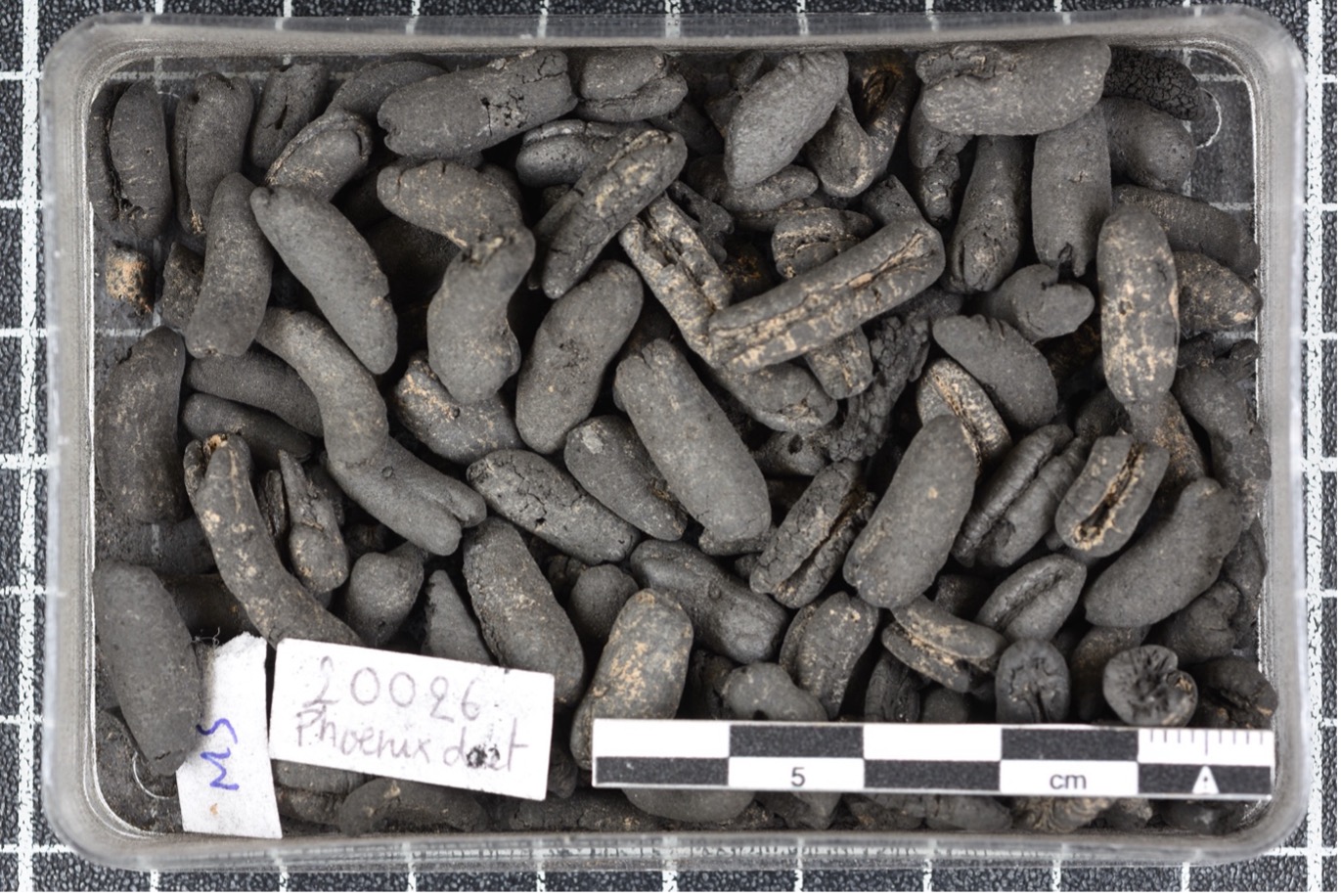
This Final Report presents the outcomes of the project “Ethnographic, Genetic, and Morphometric Analyses of the Date Palm Agrobiodiversity in al-ʿUlā Oasis” (2019–2025), hereafter referred to as the al-ʿUlā DPA Project. Conducted through an agreement between AFALULA and the CNRS & New York University Abu Dhabi, the project adopted an interdisciplinary framework integrating social anthropology, population genetics, morphometrics, and archaeobotany to document and analyze the exceptional agrobiodiversity of the date palms of al-ʿUlā (Kingdom of Saudi Arabia).
Over six years, the project combined extensive fieldwork and laboratory analyses and generated substantial qualitative and quantitative datasets on local diversity, classification systems, cultivation practices, and genetic and morphological variation. A purposive sampling strategy, informed by local knowledge and grove management contexts, ensured that biological material was collected in a representative and well-documented manner. The resulting genomic dataset—based on the sequencing of 539 date palms, the largest sets ever produced for a single oasis—together with an extensive morphometric reference of seeds, provided robust baselines for interpreting both present-day diversity and its long-term historical foundations. For the first time, the project also produced a comprehensive inventory of varieties in al-ʿUlā and clarified their current status and distribution.
Taken together, these results demonstrate that date-palm agrobiodiversity in al-ʿUlā constitutes both a cultural and a biological resource of strategic importance. The project provides AFALULA, RCU and the wider scientific community with tools and reference datasets that can inform conservation priorities, guide nursery production and planting strategies, support varietal identification and traceability, and contribute to sustainable development and heritage initiatives in the oasis.
By integrating ethnographic, genomic, morphometric and archaeobotanical perspectives, the al-ʿUlā DPA Project positions al-ʿUlā as a reference site for future research on date-palm diversity and the long-term evolution of oasis agroecosystems.
➡︎ Work produced under the project al-ʿUlā DPA ❎.