Minor Mode - Social anthropology on settled nomads, Aswan region (Egypt), work in collaboration with archaeologists.
- New Fieldwork from 2015.
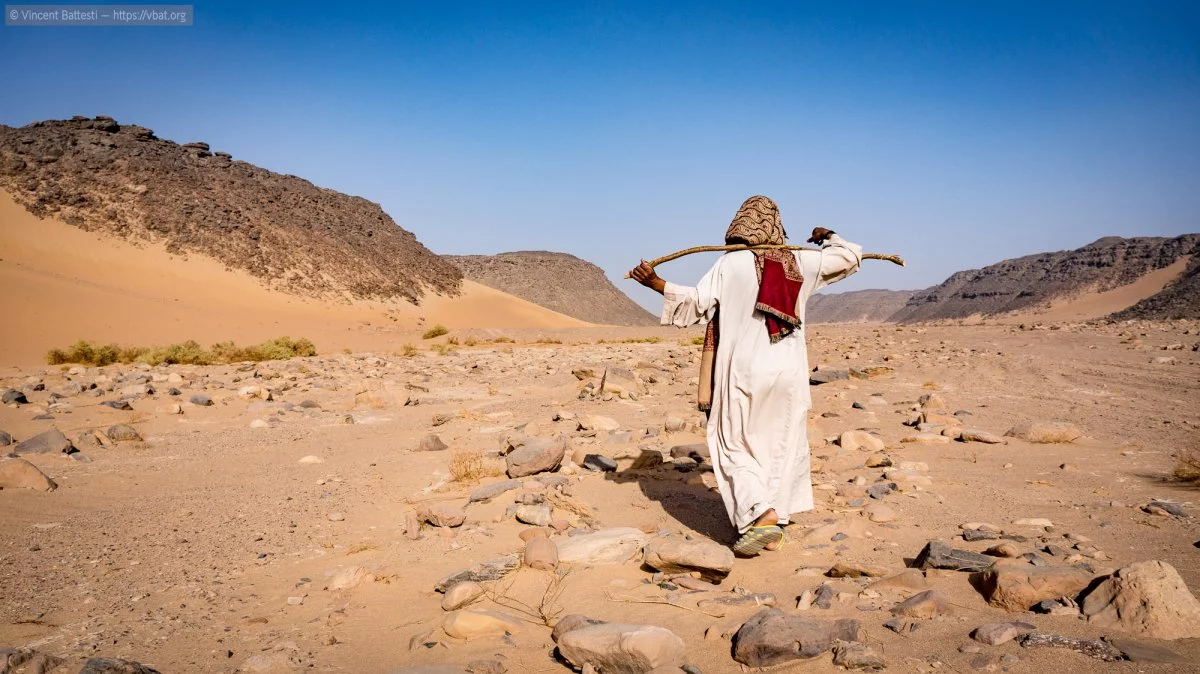
This new Egyptian ethnographic fieldwork initiated in Feb. 2015 is located in the Aswan region [Aswān] in Nubia, but concerns a fraction of a population, the ʿAbābdah (العبابدة) who call themselves Arab Bedouins (the ethnographic literature however attaches them most of the time to the Beja group).
Former pastoral nomads population, these families are settled in the village of Khor Abū Subayrah, near the Nile, at the mouth of wādī Abū Subayrah.
The idea is to work with a team of archaeologists, for an archaeological project in the desert inside the Wādī, whose primary purpose is the survey and study of the rock art.
The wādī Abu Subayrah is part of lineages territory of the ʿAbābdah tribe. They have settled on the site since probably only about fifty years. I am in charge of documenting the relationships of the local ʿAbābdah— poorly known from ethnological works—with rock arts that dot their territory, their uses and their relationship to this space. Participating in archaeological missions, and then continuing my investigation alone after the departure of French and Egyptian archaeologists, I contribute on the one hand to meet direct questions of the archaeologists on the uses and recent interpretations by the ʿAbābdah during the common fieldwork and then I contribute, in the other hand, immersed myself more in the local community to document their lives in a more comprehensive manner.